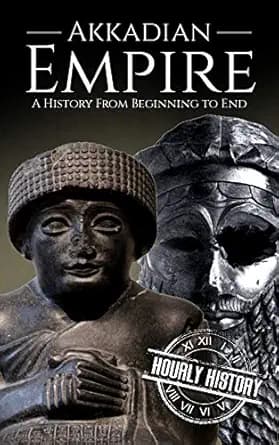
Akkadian Empire: A History from Beginning to End (Mesopotamia History)
MesopotamiaAdded on January 11, 2026
Description
Discover the remarkable history of the Akkadian Empire....Free BONUS Inside!The Akkadian Empire was one of the first true empires in human history—and the first to unite a large, multi-ethnic population under a centralized government. From the creation of the earliest known postal system to groundbreaking advances in science, art, and medicine, the Akkadians laid the foundation for civilization as we know it. At its heart stood the city of Akkad, a thriving trade hub and one of the largest cities in the ancient world. And yet, in a surprisingly short time, it all vanished.The empire collapsed. The city was abandoned. Today, the exact location of Akkad remains a mystery. How could such a powerful empire suddenly fall into ruin? Later civilizations spoke of a divine punishment—the so-called Curse of Akkad—but modern research suggests a more tangible culprit: sudden and devastating climate change. This book explores the dramatic rise and mysterious fall of a civilization that shaped the ancient world and then disappeared into legend.Discover a plethora of topics such asOrigins: The Black Heads and King SargonPalace Conspiracies and AssassinationsNaram-Sin and the Curse of AkkadThe 4.2 Kiloyear EventThe Fall of the Akkadian EmpireThe Search for AkkadAnd much more!So if you want a concise and informative book on the Akkadian Empire, simply scroll up and click the "Buy now" button for instant access!
Reader Reviews
2.5 starsshort review for busy readers:Although easy to read, this Hourly History condenses facts too much which blurs the actual events and leads to some confusion and misunderstanding on the part of the reader. For example: the text makes no mention that Akkadians and Sumerians lived as neighbours for hundreds of years. This lack makes it sounds like one day, a Sumerian (King Sargon) who was actually an Akkadian, took over Sumer, THEN established the culture of Akkad, then changed Sumer into A
The Akkadians succeeded the Sumerians. A shame as the Sumerians came across as being more inventive and functional. Much of this story involved battles and accounts of changes of leadership. I thought the Sumerians died out or disappeared (I probably misread that) so it seems the populace carried on, only with new leaders installed across their cities. Strange then, that the Sumerian DNA didn’t make it to modern times. I enjoyed the climate-change-induced abandonment of cities in this Hourly His
The author tries to understand what happened to Mesopotamia through global perspective.It starts off with a great entr'/ intr'o-duct'ion.(Kindle Ed. pp. 4-5)...The part of Mesopotamia which became Sumer is very small—it had a total land area of just 14,000 square kilometers which is around the same size as the American state of Connecticut—and the flat alluvial plain and the lack of natural features such as mountains meant that most Sumer cities were within sight of one another.Awesome piece of