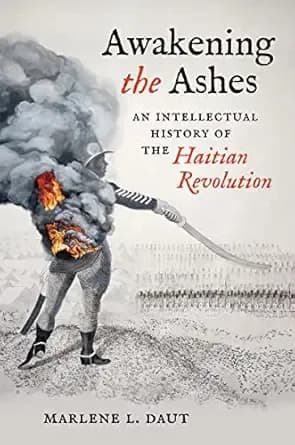
Awakening the Ashes: An Intellectual History of the Haitian Revolution
Caribbean & Latin AmericanAdded on February 13, 2026
Description
The Haitian Revolution was a powerful blow against colonialism and slavery, and as its thinkers and fighters blazed the path to universal freedom, they forced anticolonial, antislavery, and antiracist ideals into modern political grammar. The first state in the Americas to permanently abolish slavery, outlaw color prejudice, and forbid colonialism, Haitians established their nation in a hostile Atlantic World. Slavery was ubiquitous throughout the rest of the Americas and foreign nations and empires repeatedly attacked Haitian sovereignty. Yet Haitian writers and politicians successfully defended their independence while planting the ideological roots of egalitarian statehood.In Awakening the Ashes, Marlene L. Daut situates famous and lesser-known eighteenth- and nineteenth-century Haitian revolutionaries, pamphleteers, and political thinkers within the global history of ideas, showing how their systems of knowledge and interpretation took center stage in the Age of Revolutions. While modern understandings of freedom and equality are often linked to the French Declaration of the Rights of Man or the US Declaration of Independence, Daut argues that the more immediate reference should be to what she calls the 1804 Principle that no human being should ever again be colonized or enslaved, an idea promulgated by the Haitians who, against all odds, upended French empire.
Reader Reviews
"Not long after the Louisiana Purchase in 1803, the relationship between independent Haiti and the United States considerably cooled. An article published in the October 17, 1804, issue of Haiti’s Gazette politique et commerciale and written by Joseph Rouanez provided a prescient analysis of the more metaphysical meanings, rather than the purely material effects, of the change that U.S.–Haitian trade relations underwent once the pro-slavery Thomas Jefferson became president. Rouanez wrote that t
If you are an academic studying 18th and 19th century Haiti, you'll love this book. Otherwise, don't bother.
(3.5) Very good! In the first few chapters, the author jumps around chronologically way too much, often inside the same paragraph, which can be super confusing. But the book is very well researched and I basically agreed with all the author's takes.
Price History
Recommended for You
Based on this book
Dragonskull: Sword of the Squire

Alien Kid

The Box
Under the Light of the Italian Moon: Inspired by a true story of love and women’s resilience during the rise of fascism and World War II

The Trespasser (Amish Country Brides)

Here After

Target Practice Mysteries 1 & 2 (Target Practice Mysteries Boxset)

Dial P For Poison (Movie Club Mysteries, Book 1): An Irish Cozy Mystery